Designed to know the difference.

Many treatments work by stopping every dividing cell, including the immune cells that protect you, leaving patients vulnerable. TRE-515 is designed to target abnormally activated cells, leaving normal healthy cells virtually untouched and naïve immune cells intact.
Designed to know the difference.

Many treatments work by stopping every dividing cell, including the immune cells that protect you, leaving patients vulnerable. TRE-515 is designed to target abnormally activated cells, leaving normal healthy cells virtually untouched and naïve immune cells intact.

Scroll to:
The Foundation

Every Cell Needs DNA to Divide

Before a cell divides, it must produce the building blocks needed to make a new copy of its DNA. The cell can then split into two, giving each new cell a complete set of DNA.

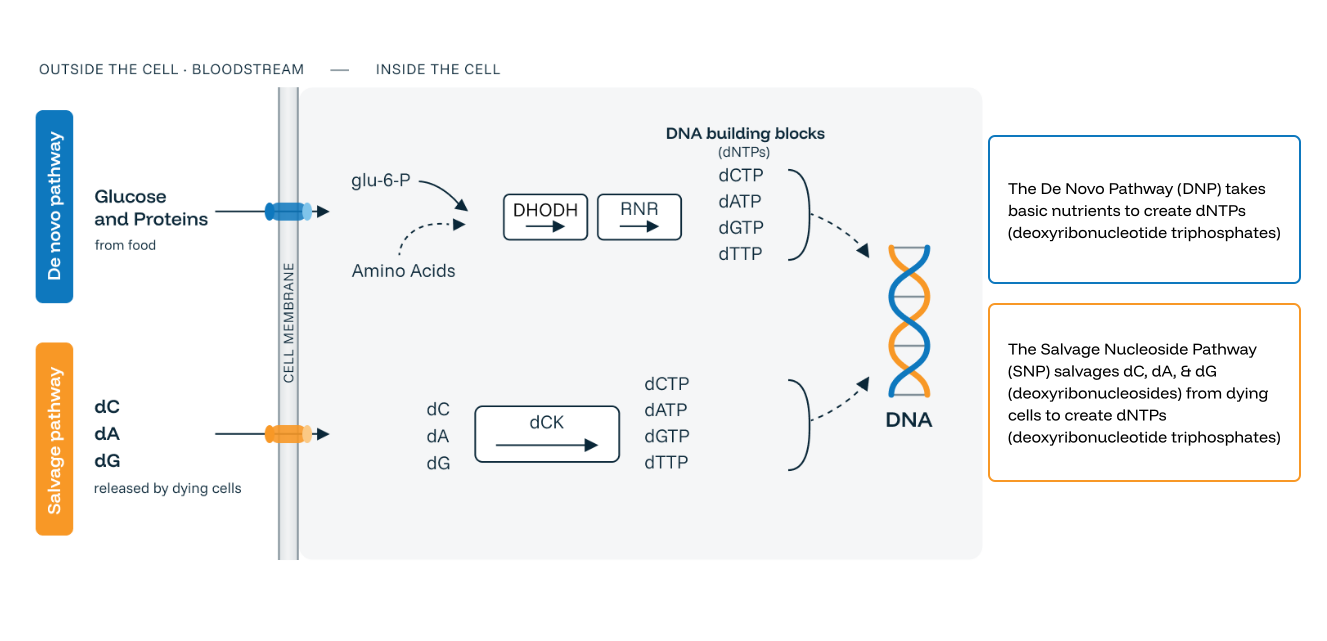
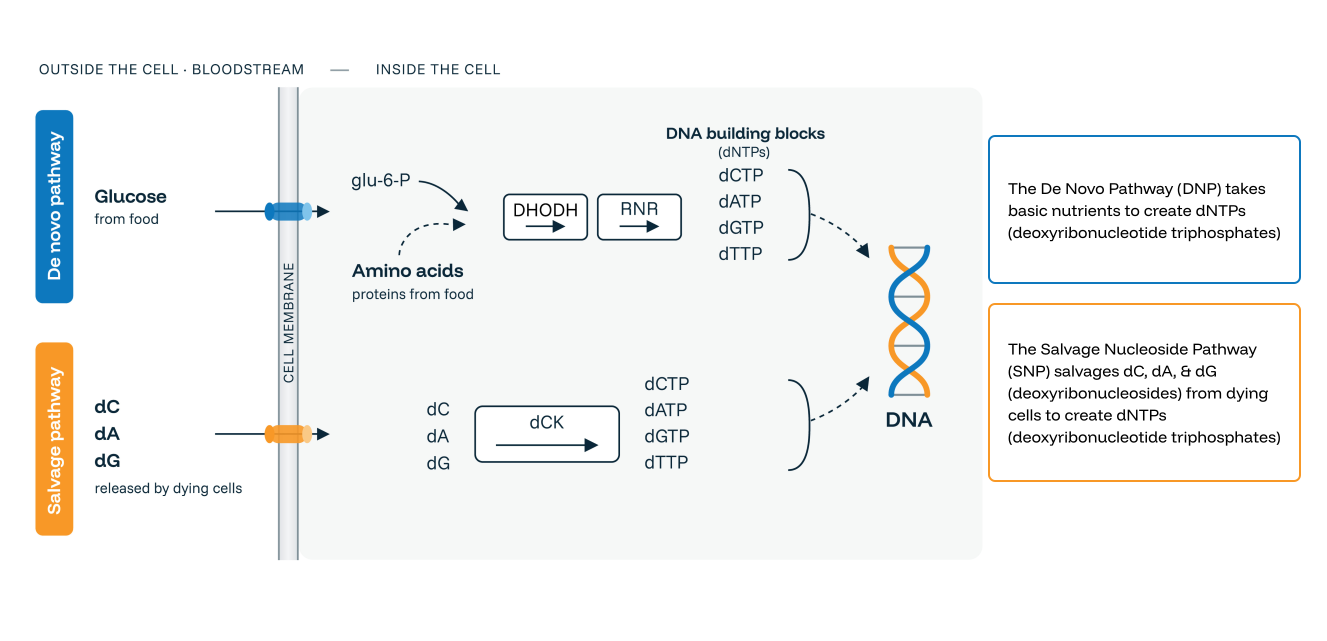
Normal, healthy cells usually make fresh DNA building blocks from basic nutrients through a process called the De Novo pathway. Rapidly reproducing abnormal cells, however, often recycle materials from partially degraded cells and use those materials to reconstruct DNA building blocks through a shortcut called the Salvage Pathway.

The Foundation

Every Cell Needs DNA to Divide

Before a cell divides, it must produce the building blocks needed to make a new copy of its DNA. The cell can then split into two, giving each new cell a complete set of DNA.

Normal, healthy cells usually make fresh DNA building blocks from basic nutrients through a process called the De Novo pathway. Rapidly reproducing abnormal cells, however, often recycle materials from partially degraded cells and use those materials to reconstruct DNA building blocks through a shortcut called the Salvage Pathway.

The Shortcut

Cancer cells and overactive immune cells become more reliant on the Salvage Pathway

Cells obtain DNA precursors through both De Novo and nucleoside Salvage Pathways. Under conditions of rapid proliferation or cellular stress, cancer and activated immune cells can become increasingly reliant on the Salvage Pathway. TRE-515 is designed to inhibit dCK, a key enzyme in this pathway.
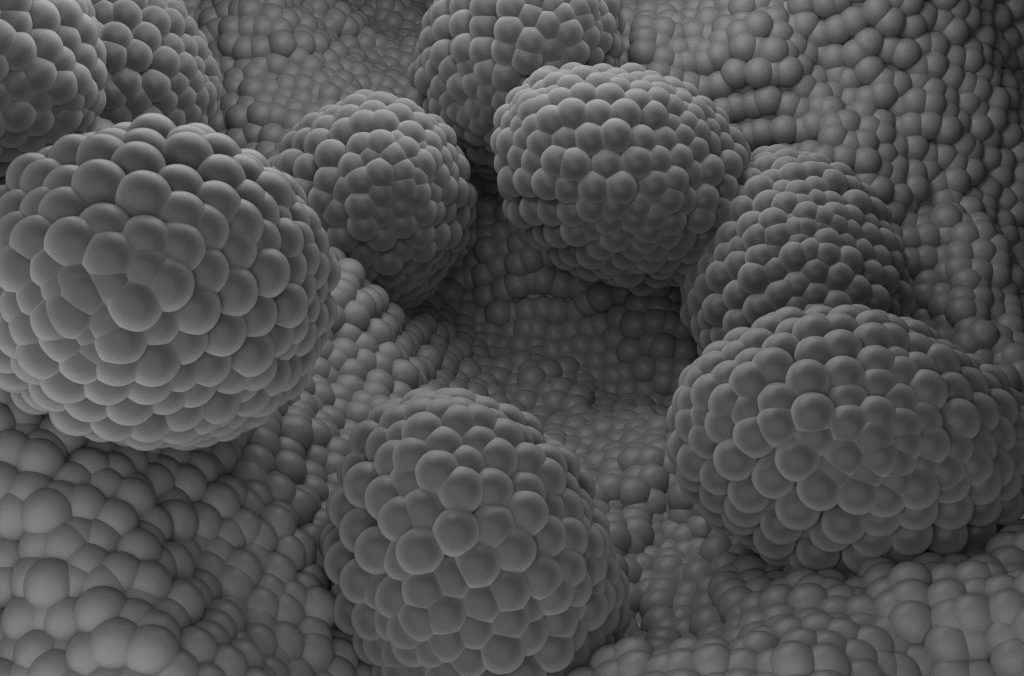
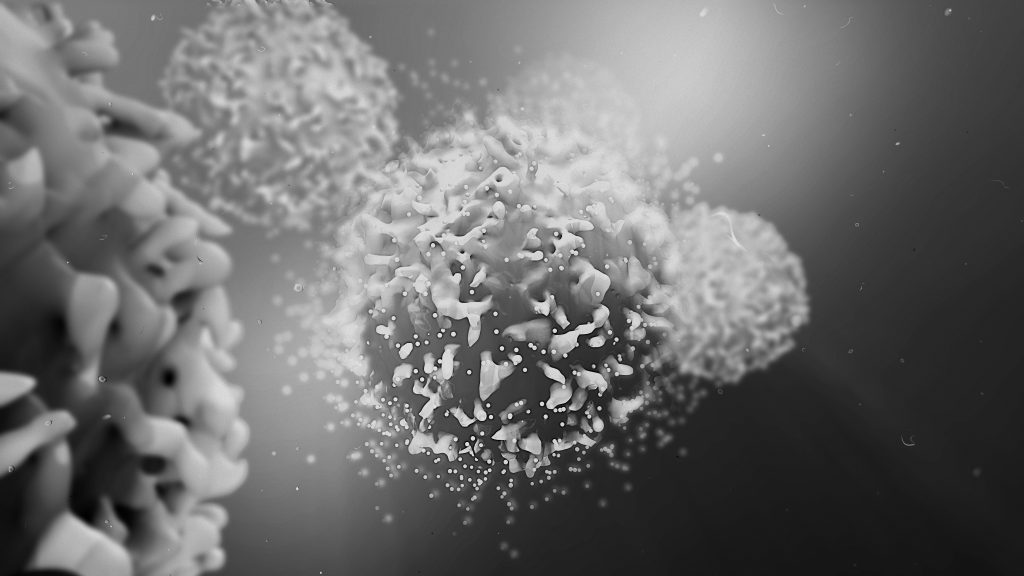
Cancer Cells

Gray, 3D-rendered clusters of rounded, bumpy, cell-like shapes filling the image, resembling microscopic or molecular structures, creating a textured and organic pattern.

Activated T-cells

Close-up, black-and-white image of microscopic cells or particles, possibly depicting a biological or scientific concept, with irregular surfaces and small particles floating around them.

DNA

A black and white abstract illustration of a DNA double helix strand, depicted with intersecting lines and dots on a white background.
The Mechanism

How TRE-515 Works

TRE-515 is an oral drug developed by UCLA scientists to inhibit dCK, a key enzyme in the Salvage Pathway. Without dCK, abnormal cells cannot convert the recycled precursors (dC, dA, dG) into dNTPs. So, rapidly dividing abnormal cells suffer from replication stress.

Cancerous tumors strain to continue growing, and T & B cells causing autoimmune attacks struggle to reproduce fast enough to maintain their numbers. During the dose escalation clinical trial, as well as early toxicology mouse studies, TRE-515 did not produce broad hematologic suppression.
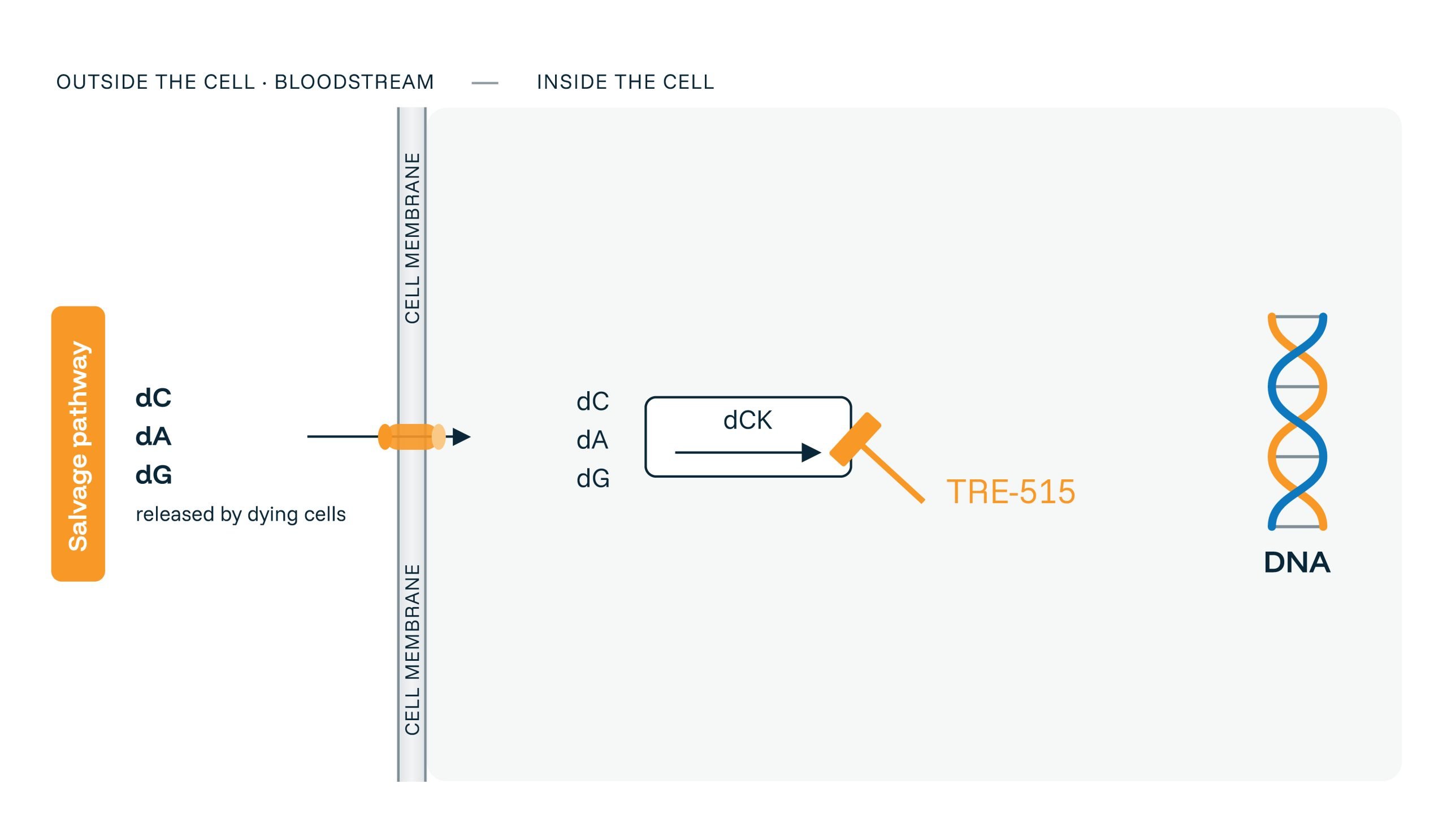

Diagram showing the salvage pathway where dC, dA, and dG enter a cell, are converted by dCK, and TRE-515 inhibits this pathway, ultimately affecting DNA inside the cell.

In Summary

Cancer cells and the rogue immune cells behind autoimmune disease share one habit: they reproduce fast using a shortcut.

A cube surrounded by three circular arrows, symbolizing a continuous cycle or process, such as recycling, sustainability, or iterative development.

The Salvage Pathway

Rapidly reproducing abnormal cells (cancer or autoimmune) take a shortcut, salvaging materials from other cells to make DNA building blocks faster than using basic nutrients.
A simple black and white icon showing five interconnected cubes, representing a blockchain or network structure, with lines linking each cube to the central cube.

TRE-515 blocks dCK

The Salvage Pathway depends on one enzyme, dCK, to supply DNA building blocks (dNTPs). Shut down dCK, and abnormal cells can’t use the pathway, making cell division more difficult.
Three outlined cubes are connected. The top left cube has an open side with a line extending upward and curving down, forming an abstract geometric design.

The De Novo Pathway

Healthy cells build dNTPs from the food we eat. Drugs that block this pathway may also harm the body’s normal immune cells, leaving patients at risk. Since TRE-515 doesn’t block the De Novo pathway, patients can maintain a healthy immune system.
Our Commitment

In Summary

Cancer cells and the rogue immune cells behind autoimmune disease share one habit: they reproduce fast using a shortcut.

A cube surrounded by three circular arrows, symbolizing a continuous cycle or process, such as recycling, sustainability, or iterative development.

The Salvage Pathway

Rapidly reproducing abnormal cells (cancer or autoimmune) take a shortcut, salvaging materials from other cells to make DNA building blocks faster than using basic nutrients.
A simple black and white icon showing five interconnected cubes, representing a blockchain or network structure, with lines linking each cube to the central cube.

TRE-515 blocks dCK

The Salvage Pathway depends on one enzyme, dCK, to supply DNA building blocks (dNTPs). Shut down dCK, and abnormal cells can’t use the pathway, making cell division more difficult.
Three outlined cubes are connected. The top left cube has an open side with a line extending upward and curving down, forming an abstract geometric design.

The De Novo Pathway

Healthy cells build dNTPs from the food we eat. Drugs that block this pathway may also harm the body’s normal immune cells, leaving patients at risk. Since TRE-515 doesn’t block the De Novo pathway, patients can maintain a healthy immune system.
What it adds up to

Now that you know how it works,

You can see why TRE-515 has the potential to matter well beyond a single disease, across cancers and autoimmune conditions alike, and why Trethera is pursuing this opportunity to potentially change millions of lives.

What it adds up to

Now that you know how it works,

You can see why TRE-515 has the potential to matter well beyond a single disease, across cancers and autoimmune conditions alike, and why Trethera is pursuing this opportunity to potentially change millions of lives.

Grounded in published Research

The case for blocking dCK has been building in peer-reviewed science for over a decade.